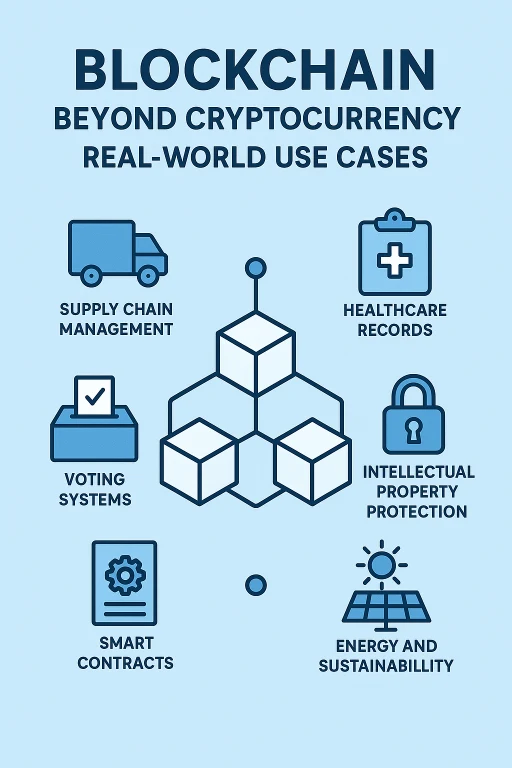
When most people hear “blockchain,” they immediately think of Bitcoin or Ethereum. While cryptocurrencies brought blockchain technology into the mainstream, its potential goes far beyond digital money. Blockchain is fundamentally a secure, decentralized ledger system, and industries worldwide are discovering innovative ways to leverage it. Let’s explore some real-world applications of blockchain beyond cryptocurrency.
1. Supply Chain Management
Tracking products across complex supply chains has always been a challenge. Blockchain provides transparency and immutability, ensuring that every step—from production to delivery—is recorded.
Example: Companies like Walmart and IBM use blockchain to trace food products. If contamination occurs, blockchain allows immediate identification of the source, reducing health risks and financial losses.
2. Healthcare Records
Managing patient data is often fragmented across hospitals, clinics, and insurance providers. Blockchain can securely store medical records, giving authorized personnel instant access while maintaining privacy.
Benefits:
- Prevents data tampering
- Reduces administrative errors
- Enables better collaboration among healthcare providers
3. Voting Systems
Traditional voting systems are susceptible to fraud and inefficiency. Blockchain can provide transparent and tamper-proof voting, ensuring that every vote is counted accurately.
Example: Some countries and tech startups are experimenting with blockchain-based elections to enhance security and voter trust.
4. Intellectual Property Protection
Artists, musicians, and content creators often struggle with piracy and copyright infringement. Blockchain can create an immutable record of ownership, ensuring creators retain control over their work.
Use Cases:
- Tracking music royalties automatically
- Certifying digital art authenticity (NFTs in art and media)
5. Smart Contracts
Smart contracts are self-executing agreements coded on blockchain. They automatically enforce terms without intermediaries, reducing delays and costs.
Industries benefiting from smart contracts:
- Real estate: Automating property transfers
- Insurance: Automatic claims processing
- Legal: Streamlined contract enforcement
6. Energy and Sustainability
Blockchain can optimize energy trading and sustainability tracking. For example, renewable energy producers can use blockchain to record energy production and trade credits transparently.
Example: Brooklyn Microgrid allows residents to trade solar energy credits directly using blockchain.
7. Identity Verification
Digital identity management is another area where blockchain shines. It offers a secure way to verify identities without relying on central authorities, reducing identity theft and fraud.
Applications:
- Government-issued digital IDs
- KYC processes for banks and financial services
- Access control in corporate environments
Conclusion
Blockchain’s potential extends far beyond cryptocurrency. From healthcare and supply chain management to voting and intellectual property, this revolutionary technology is transforming industries worldwide. As adoption grows, businesses and governments will continue to explore blockchain solutions that enhance transparency, security, and efficiency.