When most of us think about healthcare, we picture doctors, nurses, and hospitals. But behind the scenes, another powerful player is stepping into the spotlight: Artificial Intelligence (AI). From helping doctors detect diseases earlier to creating treatment plans tailored to each patient, AI is quietly transforming the way healthcare works—and it’s only just beginning.
🧠 Smarter Diagnosis with AI
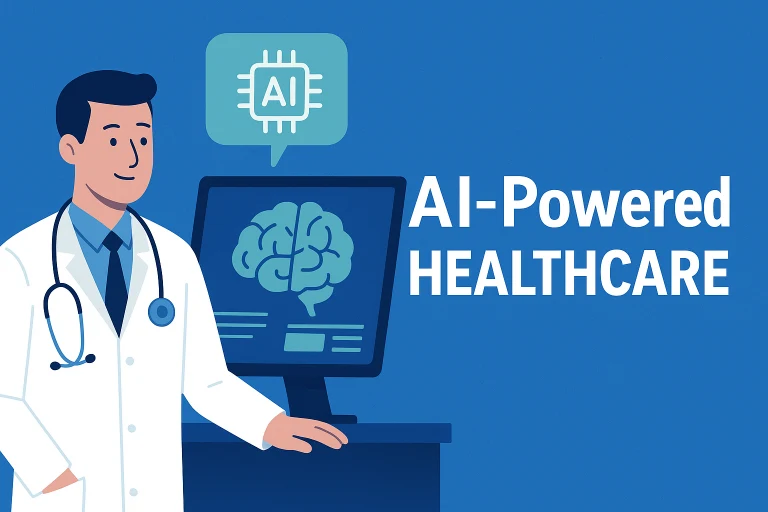
One of the biggest challenges in medicine is spotting illnesses early and accurately. AI systems can analyze medical images like X-rays, MRIs, and CT scans faster—and sometimes more precisely—than human eyes. For example, AI has shown promise in detecting cancers, heart diseases, and even eye conditions at stages when they’re most treatable.
Doctors still make the final call, but AI acts like a second opinion, reducing errors and saving precious time. Imagine going to your doctor and knowing that not only do you have their expertise, but also a machine that’s been trained on millions of similar cases.
💊 Personalized Treatment Plans
Traditionally, treatments have followed a “one-size-fits-all” approach. But our bodies are different, and so are our responses to medicine. AI can process huge amounts of patient data—from genetics to lifestyle habits—and help create personalized treatment plans.
Think of it this way: instead of just giving two patients with the same disease the same drug, AI might suggest different dosages or combinations based on their unique biology. That means fewer side effects and more effective outcomes.
🏥 Virtual Health Assistants
We’re also seeing the rise of AI-powered chatbots and virtual assistants in healthcare. These tools can answer medical questions, remind patients to take their medication, or even track symptoms over time. While they can’t replace doctors, they can make healthcare more accessible—especially in areas where hospitals are far away.
⚠️ Challenges and Concerns
Of course, AI in healthcare isn’t without challenges. Privacy is a big concern—your health data is sensitive, and keeping it secure is crucial. There’s also the risk of over-relying on AI, forgetting that it’s a tool to assist doctors, not replace them. And, like any technology, AI is only as good as the data it’s trained on.
🌍 The Future of Healthcare
Looking ahead, AI could play a role in predicting outbreaks, speeding up drug discovery, and even making mental health support more widely available. The goal isn’t to replace human doctors, but to give them better tools so patients get faster, safer, and more accurate care.
✨ Final Words
AI in healthcare isn’t science fiction anymore—it’s here, shaping how we prevent, diagnose, and treat illnesses. While challenges like privacy and ethical concerns remain, the potential benefits are enormous. We’re moving toward a future where healthcare is not just reactive but proactive and personalized.
At the end of the day, AI isn’t about replacing the human touch in medicine—it’s about enhancing it, making sure every patient receives care that’s not only smarter but also more compassionate.